
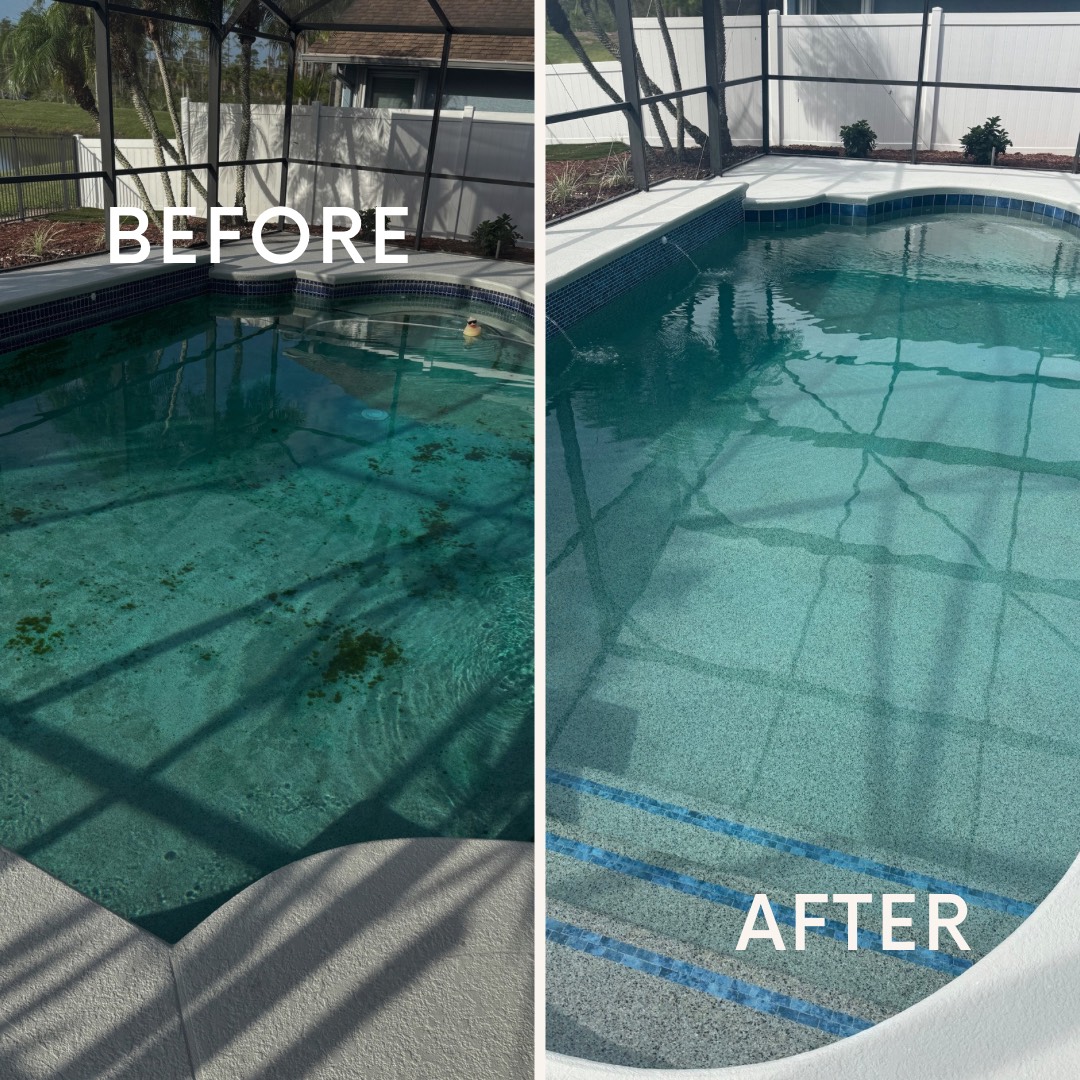
Does Your Pool Feel Like Sandpaper? 5 Signs It’s Time to Resurface Before Summer Hits
Does Your Pool Feel Like Sandpaper? 5 Signs It’s Time to Resurface Before Summer Hits
There is a specific, unmistakable feeling that comes with a pool finish that has reached its expiration date. You’re enjoying a Saturday afternoon dip, you push off the wall or step onto the top stair, and—ouch.
It’s the "Sandpaper Pedicure."
If your pool surface has transitioned from a smooth, inviting oasis to a textured hazard that scrapes toes, snags swimsuits, and harbors algae, you aren't alone. In the world of Florida outdoor living, the pool finish is the hardest-working element of your backyard. It fights a 24/7 battle against UV rays, fluctuating chemical levels, and thousands of gallons of pressurized water.
At Daydream Outdoor Living, we believe your pool should be a source of relaxation, not a source of "pool toe." As we approach the heat of the 2026 swim season, understanding the health of your pool’s interior is the difference between a summer of fun and a summer of expensive, emergency repairs.
In this ultimate guide, we’re breaking down the science of why pool finishes fail, the five undeniable signs that it’s time to resurface, and how a modern remodel can actually save you money in the long run.
The Anatomy of a Pool Surface: What’s Actually Happening?
Before we dive into the signs of failure, it’s important to understand what your pool is made of. Most residential pools are constructed with a concrete (gunite or shotcrete) shell. However, concrete is porous. If you filled a raw concrete shell with water, it would leak through the walls like a sponge.
The finish (plaster, quartz, or pebble) is the waterproof "skin" of your pool. It’s usually about a half-inch thick.
Over 10 to 15 years, that skin begins to thin. The smooth cement paste that binds the finish together eventually dissolves, leaving behind the raw aggregates (the sand and stone). This is what creates that sandpaper texture. When the skin fails, the "skeleton" (the concrete shell) is at risk.
Sign #1: The Texture Test (The "Sandpaper" Sensation)
The most common complaint we hear at Daydream Outdoor Living is: "My kids' feet are bleeding after an hour in the pool."
This isn't just an annoyance; it’s a sign of leaching.
Why it happens:
Pool water is hungry. If your water chemistry isn’t perfectly balanced—specifically the Calcium Hardness—the water will actually "eat" the calcium out of your pool walls to satisfy its appetite. This process, known as etching, strips away the smooth cream of the plaster.
The 2026 Perspective:
In years past, people just accepted that plaster would get rough. In 2026, we have access to high-performance finishes like polished pebble and glass bead infusions. These materials are specifically designed to resist etching and maintain a "silky" feel for twice as long as traditional white plaster.
The Verdict: If you can’t slide your hand across the wall without feeling a gritty residue, your finish is no longer protecting the structure. It’s time to resurface.
Sign #2: Unexplainable Stains (The "Chemistry Ghost")
Have you noticed brownish, grayish, or even copper-colored streaks on your pool floor that won’t go away, no matter how much you scrub or shock the water?
Staining is often a sign that the finish has become porous. Think of a new marble countertop versus an old, unsealed one. The new one wipes clean; the old one absorbs red wine instantly.
Types of Stains to Watch For:
Mineral Staining: Often caused by copper or iron in the water, these metallic stains "lock" into the pores of an aging finish.
Organic Staining: Leaves or acorns sitting on a degraded surface can leave permanent "tattoos" that an acid wash can’t even touch.
Mottling: This looks like greyish clouds under the water. It’s often a sign that water has seeped behind the finish, causing it to darken and lose its structural integrity.
While some stains are purely cosmetic, widespread discoloration usually indicates that the finish's protective seal is gone. If your pool looks "dirty" even when the water is crystal clear, the material itself is the problem.
Sign #3: "Chalking" and Cloudy Water
Have you ever rubbed your hand against the pool wall and seen a cloud of white "dust" come off? That is chalking.
Chalking is essentially your pool finish disintegrating into the water. This is a major red flag for two reasons:
Filtration Issues: That white dust (calcium) clogs your filter, requiring more frequent cleanings and putting unnecessary strain on your pump.
Chemical Imbalance: As the wall dissolves into the water, it constantly spikes your pH levels. You’ll find yourself spending a fortune on acid and chemicals just to keep the water from turning green, simply because the walls are fighting you.
At Daydream Outdoor Living, we often find that customers who resurface their pools see a 20-30% reduction in monthly chemical costs because they are no longer "treating" their dissolving walls.
Sign #4: Spider Cracks and "Checkering"
Take a close look at your pool steps or the "shallows." Do you see tiny, hair-like cracks that look like a spiderweb? This is called checkering.
In many cases, checkering is superficial. However, in the Florida sun, these tiny cracks can expand. If water gets into those cracks and reaches the rebar (the steel cage) inside your concrete shell, the steel will rust. Rust expands. Expanded rust causes spalling, where huge chunks of your pool wall literally pop off.
When to Worry:
If the cracks are wider than a credit card, or if you see "rust spots" bleeding through the floor, you have a structural concern. Resurfacing now can "seal" the shell and prevent a $2,000 repair from turning into a $20,000 structural failure.
Sign #5: Delamination (The "Bubble" Effect)
Delamination is the "end stage" of a failing pool finish. This happens when the bond between the original concrete shell and the plaster skin fails.
How to spot it:
You might see a "blister" or a bubble on the floor.
If you tap on the floor with a PVC pipe and hear a "hollow" thud instead of a solid "clink," you have a delamination spot.
Eventually, these spots will crack and peel away, leaving raw, grey concrete exposed.
Once a pool starts delaminating, there is no "patch." The entire surface must be chipped out and replaced to ensure a proper bond for the new material.
Why 2026 is the Year of the "Pebble Revolution"
If you’ve decided it’s time to resurface, the next question is: What should I use?
In 2026, the industry has moved far beyond the basic white plaster of the 1990s. At Daydream Outdoor Living, we specialize in modern materials that turn your pool resurfacing project into a full-blown backyard remodel.
1. The Quartz Finish (The Balanced Choice)
Quartz finishes are a blend of fortified cement and crushed quartz crystals.
The Benefit: It’s much harder than standard plaster and comes in a variety of colors.
The Vibe: It gives the water a shimmering, reflective quality. It’s the perfect middle ground for homeowners who want durability without the premium price tag of pebble.
2. The Pebble Finish (The Gold Standard)
Pebble finishes use small, smooth river stones or manufactured pebbles embedded in the cement.
The Benefit: These are nearly indestructible. They are naturally resistant to chemical imbalances and can last 20+ years.
The Vibe: Pebble finishes create a "natural" look. Depending on the stone color, you can make your pool look like a Caribbean beach or a deep Tahitian lagoon.
3. Glass Bead Infusions (The Ultimate Luxury)
For our clients who want the "Daydream" experience, we offer glass bead additives.
The Benefit: The glass is non-porous and incredibly smooth.
The Vibe: When the sun hits the water, the glass beads catch the light, creating a "glow" that you simply can't get with any other material.
The "While You’re At It" Factor: Remodeling in 2026
Resurfacing requires draining the pool completely. This is the perfect (and most cost-effective) time to consider functional upgrades. If you’re already resurfacing, the "labor" of having the pool empty is already done.
Many of our customers at Daydream Outdoor Living choose to pair resurfacing with:
Waterline Tile Replacement: Your tile usually ages at the same rate as your plaster. Swapping out old 6x6 blue tiles for modern glass mosaics or "split-face" stone can completely change the look of your backyard.
LED Lighting Upgrades: If you still have an old, incandescent "yellow" light, we can swap it for color-changing LED lights that you can control from your smartphone.
Adding a Tanning Ledge: Yes, we can actually build a sun shelf into your existing pool during the resurfacing process!
Hardscape Integration: While the pool is being worked on, it’s the ideal time to replace that cracked concrete deck with travertine or porcelain pavers.
The Resurfacing Process: What to Expect
We know that "construction" can be a scary word. At Daydream Outdoor Living, we pride ourselves on a "Clean Site" policy. Here is how we take you from "Sandpaper" to "Smooth" in typically 7 to 14 days:
Drain & Prep: We safely pump the water into the appropriate drainage area. We then "undercut" the tile line and fittings to ensure the new finish has a thick, waterproof edge to bond to.
The "Chip Out": We remove any loose or delaminated old plaster.
The Bond Coat: We apply a specialized "glue" (bond coat) that ensures the new finish sticks to the old shell forever.
Application: Our artisans hand-trowel the new finish. This is a true craft—getting a perfectly smooth finish on a curved pool floor takes years of experience.
The Exposure (For Pebble/Quartz): We carefully wash away the top layer of cement to reveal the beautiful stones or crystals underneath.
Refill & Startup: This is the most critical stage. We help you balance the water chemistry immediately to "lock in" the finish and prevent scaling.
Why "Before Summer" is the Most Critical Window
In Florida, everyone thinks about their pool in June. By then, our schedule is usually booked through August.
Resurfacing your pool in the early spring has three major advantages:
Curing Weather: The mild spring temperatures are ideal for cement to cure slowly and evenly, which prevents "shrinkage cracks."
Water Costs: Filling a pool in the cooler months results in less evaporation during the initial "startup" phase.
The Grand Opening: Your pool will be crystal clear and perfectly balanced the very first day the temperature hits 85 degrees.
Conclusion: Don't Settle for a "Daymare" Backyard
Your pool is likely the most expensive feature of your home. Letting the interior finish degrade isn't just a matter of comfort; it’s a matter of protecting your investment.
If your pool feels like sandpaper, if you’re tired of the "chemistry battle," or if you’re just ready to turn that 15-year-old pool into a 2026 masterpiece, Daydream Outdoor Living is here to help. We don’t just slap on a new coat of plaster—we look at your entire outdoor living space, from the pavers to the artificial turf to the outdoor kitchen, to ensure your backyard is a cohesive, luxury destination.
Ready to feel the difference of a smooth, modern pool?
[Click here to request your Free Pool Evaluation & Resurfacing Quote]
Serving the community with custom builds, weekly maintenance, and complete outdoor transformations.