
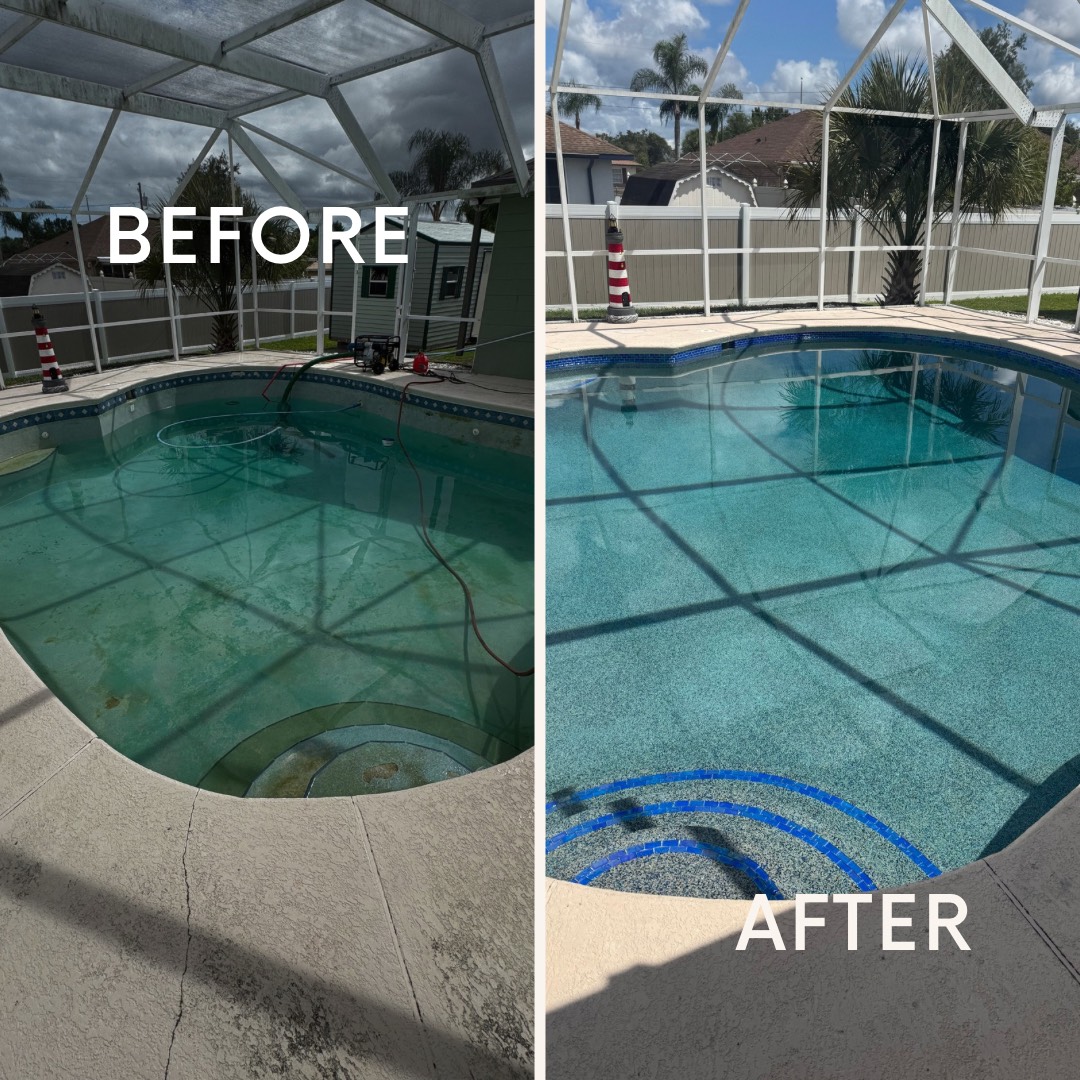
5 Signs Your Orlando Pool Needs Resurfacing (Don't Wait Too Long!)
5 Signs Your Orlando Pool Needs Resurfacing (Don't Wait Too Long!)
Your pool is the centerpiece of your backyard—a place for family gatherings, summer fun, and relaxation. But when the surface starts to deteriorate, it's not just an eyesore. A failing pool finish can damage your equipment, create safety hazards, and lead to expensive structural repairs if ignored.
At Daydream Outdoor Living, we resurface dozens of pools across Central Florida every year. We've seen what happens when homeowners wait too long, and we've also seen the dramatic transformation when they act at the right time.
Here are the five telltale signs that your Orlando pool needs resurfacing—and what happens if you ignore them.
1. Rough, Sandpaper-Like Texture
What it feels like: Walking barefoot in your pool feels like sandpaper. Your kids complain about scratchy feet. Swimsuits snag on the walls.
What's happening: Pool plaster naturally wears down over time from chemicals, UV exposure, and physical use. In Central Florida's intense sun and heat, this process accelerates. When the smooth cement paste wears away, the rougher aggregate underneath gets exposed.
Why it matters: A rough surface isn't just uncomfortable—it's a safety issue. Sharp plaster can cut feet, scrape skin, and damage pool toys and floats. It also harbors algae and bacteria in its porous texture, making your pool harder to keep clean.
The fix: This is one of the most common reasons Orlando homeowners resurface their pools. A new plaster, pebble, or quartz finish will restore that smooth, comfortable feel. Most people notice this texture change around the 8-10 year mark with standard plaster.
Don't wait because: Once aggregate is fully exposed, water can penetrate deeper into the shell, potentially causing structural damage that costs far more to repair than simple resurfacing.
2. Stains That Won't Come Out
What you see: Dark spots, brown patches, gray streaks, or discoloration that doesn't disappear with brushing, shocking, or acid washing.
What's happening: Pool stains fall into two categories:
Surface stains from organic matter, metals in the water, or algae (these can sometimes be removed)
Deep stains that have penetrated into porous, aging plaster (these are permanent)
Common stain sources in Orlando pools:
Metal stains (brown, green, purple): From well water or corroded equipment
Organic stains (green, brown): From leaves, algae, or tannins
Calcium scaling (white/gray): From hard water and high pH
Etching and mottling: Chemical imbalances that permanently discolor plaster
Why it matters: If professional acid washing can't remove the stains, your plaster is too porous and degraded to clean properly. The stains will keep coming back, and your pool will look perpetually dirty no matter how much you clean it.
The fix: Resurfacing with a fresh finish eliminates old stains completely. If you upgrade to a premium finish like pebble or quartz, you'll also get better stain resistance going forward.
Don't wait because: Porous plaster absorbs more chemicals and requires higher chlorine levels to stay clean, which accelerates further deterioration and costs you more in chemical expenses.
3. Visible Cracks, Chips, or Plaster Delamination
What you see:
Hairline cracks spiderwebbing across the surface
Chunks of plaster missing or flaking off
Bubbling or peeling sections where plaster has separated from the shell
Hollow-sounding areas when you tap the surface
What's happening: Plaster cracks for several reasons:
Settling and ground movement: Florida's sandy soil shifts, especially during heavy rains
Freeze damage: Rare in Orlando, but can happen during cold snaps if the pool isn't running
Age and brittleness: Old plaster becomes inflexible and cracks from normal thermal expansion
Poor initial application: If the plaster wasn't mixed or applied correctly, it can fail prematurely
Delamination (where plaster separates from the gunite shell) happens when water gets behind the plaster layer, often through existing cracks.
Why it matters: Small cracks might seem cosmetic, but they're pathways for water to reach the structural shell. Once water penetrates between the plaster and gunite:
The plaster loses adhesion and starts bubbling or peeling
The gunite shell can develop structural cracks
Leaks may develop, causing water loss and soil erosion around your pool
Repairs become exponentially more expensive
The fix: Minor hairline cracks can be repaired during resurfacing prep. Major delamination or structural cracks may require gunite shell repair before the new surface is applied, adding $1,000-$3,000 to your project.
Don't wait because: What starts as a $6,000 resurfacing job can turn into a $15,000+ structural repair if water damage reaches the shell. We've seen it happen countless times in Central Florida.
4. Exposed Gunite or Aggregate Showing Through
What you see: Gray concrete (gunite) visible through worn plaster, or dark pebbles/stones showing through in scattered patches.
What's happening: This is advanced plaster wear. The thin cement coating has completely worn away in high-traffic areas like steps, benches, or the shallow end. You're now looking at the structural shell or the coarse aggregate that was supposed to stay hidden beneath the smooth plaster surface.
Why it matters: Once the gunite shell is exposed, it's absorbing pool water directly. Gunite is porous and will:
Stain permanently from minerals and metals
Develop surface roughness that injures swimmers
Allow water to penetrate the rebar reinforcement, causing rust and structural failure
Become a breeding ground for algae that's nearly impossible to kill
The fix: Immediate resurfacing is essential. The longer gunite stays exposed, the more prep work (and cost) will be required to properly resurface.
Don't wait because: Exposed gunite can lead to rebar corrosion. If the steel reinforcement rusts and expands, it can crack the entire pool shell, requiring a full pool rebuild costing $30,000-$60,000+. This is not a scare tactic—it's a reality we've seen in older, neglected Orlando pools.
5. Frequent Algae Growth Despite Proper Maintenance
What you experience: Your pool constantly battles algae blooms. You're adding more chlorine than you used to. Brushing the walls shows immediate algae clouds. The pool water looks cloudy or greenish within days of balancing chemistry.
What's happening: Old, porous plaster creates microscopic pits and valleys where algae spores hide. Your chlorine can't reach these protected areas, so algae colonies survive even with proper chemical levels. As the surface degrades, it becomes increasingly difficult to maintain clear water.
This is especially problematic in Central Florida because:
Our heat and humidity accelerate algae growth
Frequent afternoon rains dilute pool chemistry
Intense UV breaks down chlorine faster
Why it matters: You're fighting a losing battle. You can dump chemicals into a deteriorating pool, but you're treating the symptoms, not the cause. You'll spend more on chlorine, algaecides, and phosphate removers than resurfacing would cost—while still swimming in a problematic pool.
The fix: A new pool surface is smooth and non-porous, giving algae nowhere to hide. Most homeowners report dramatically lower chemical usage and easier maintenance after resurfacing. Premium finishes like pebble or quartz are even more algae-resistant than standard plaster.
Don't wait because: Chronic algae problems can damage your pool equipment. Clogged filters, overworked pumps, and corroded heaters from excessive chemical use will cost you hundreds to thousands in repairs and replacements.
Other Warning Signs to Watch For
While the above five are the most common, here are additional indicators your pool needs attention:
Calcium buildup that won't scrub off: Indicates a rough, porous surface
Water level dropping faster than normal: May indicate leaks through cracks
Difficulty balancing pH and alkalinity: Old plaster affects water chemistry
Discolored or rusty water despite balanced chemistry: Indicates metal leaching from exposed rebar
Pool age over 10-12 years with original plaster: Time-based replacement is often necessary
How Long Should Pool Plaster Last in Orlando?
Here's what you can realistically expect from different pool finishes in Central Florida's climate:
White or colored plaster: 7-10 years
Quartz finishes: 10-15 years
Pebble finishes: 15-20 years
Glass bead/premium finishes: 15-20+ years
Florida's intense UV, heat, and frequent rain accelerate wear compared to other climates. If your plaster is approaching or past these timeframes and showing any of the signs above, it's time to resurface.
What Happens If You Wait Too Long?
We've resurfaced hundreds of pools in Orlando, and we've seen every level of deterioration. Here's what happens when homeowners delay:
Year 1-2 of visible wear:
Texture becomes slightly rough
Minor staining appears
Easy, standard resurfacing ($5,000-$8,000)
Year 3-4 of visible wear:
Significant roughness and staining
Small cracks develop
Moderate resurfacing with minor repairs ($7,000-$10,000)
Year 5+ of visible wear:
Exposed gunite, delamination, structural cracks
Potential shell damage and leaks
Major repairs + resurfacing ($12,000-$20,000+)
Extreme neglect:
Rebar corrosion, shell failure
Possible pool replacement ($30,000-$60,000)
The difference between a $6,000 resurfacing job and a $15,000 repair job is often just 1-2 years of waiting. Don't let a manageable maintenance project turn into a financial crisis.
When Should You Resurface Your Orlando Pool?
The best time to resurface is when you notice 2-3 of the signs listed above. Don't wait for all five—by then, you're likely dealing with structural issues.
Ideal timing:
Fall and winter months (October-February): Cooler weather helps plaster cure properly, and you're not losing prime swim season
When you're planning other backyard upgrades: Combine resurfacing with new tile, coping, pavers, or outdoor kitchen installation to save on labor costs
How Much Does Pool Resurfacing Cost in Orlando?
Pool resurfacing typically costs $5,000 to $15,000 depending on your pool size and finish choice. We've written a detailed cost breakdown for Orlando pool resurfacing that covers pricing by finish type, size, and additional upgrades.
Quick overview:
Standard plaster: $5,000-$9,000
Pebble or quartz finishes: $8,000-$15,000
Add tile and coping: +$2,000-$6,000
Most projects take 5-7 days, and you can swim again within 10 days.
Should You Resurface or Build a New Pool?
If your pool has major structural damage—cracked shell, significant leaks, failing plumbing, or equipment beyond repair—replacement might make more sense than resurfacing.
Resurface if:
The gunite shell is sound
Only the finish is deteriorated
Equipment is functioning or easily upgraded
Pool size and shape still fit your needs
Replace if:
Major structural cracks or shell failure
Outdated design you want to change
Severe plumbing or equipment issues throughout
You want a completely different pool
We can assess your pool during a free consultation and give you honest guidance on the best path forward.
Why Choose Daydream Outdoor Living for Pool Resurfacing?
As a Genesis-Certified Pool Builder serving Central Florida, we've transformed hundreds of worn-out pools into beautiful, functional backyard retreats. Our resurfacing process includes:
✓ Thorough inspection and honest assessment of your pool's condition
✓ Premium finish options from industry-leading manufacturers
✓ Expert surface prep to ensure long-lasting adhesion
✓ Proper curing protocols for Florida's climate
✓ Comprehensive warranties on all finishes
✓ Flexible financing options for qualified homeowners
We serve Orlando, Winter Park, Lake Mary, Windermere, Oviedo, Clermont, and all of Central Florida.
Ready to Resurface Your Pool?
If your pool is showing any of these warning signs, don't wait for the problem to get worse. A professional assessment takes 30 minutes and could save you thousands in future repairs.
Get a free pool resurfacing estimate from Daydream Outdoor Living.
Call us at (321) 353-6164 or schedule your free consultation online. We'll inspect your pool, explain your options, and provide a detailed written estimate with no pressure and no obligation.
Your pool should be a source of enjoyment, not frustration. Let's bring it back to life.
Frequently Asked Questions
Can I just patch cracks instead of resurfacing?
Small cracks can be patched temporarily, but they usually return because the underlying plaster is deteriorating. If you're seeing cracks, the entire surface is likely compromised. Resurfacing addresses the root problem and gives you 10-20 years of worry-free swimming.
Will resurfacing fix leaks?
Resurfacing fixes leaks caused by porous or cracked plaster. However, if the leak is from a cracked shell, failed plumbing, or equipment issues, those require separate repairs. We'll identify the leak source during our inspection.
How often should I resurface my pool in Florida?
Plan to resurface every 10-12 years with standard plaster, or every 15-20 years with premium finishes like pebble or quartz. Florida's climate wears surfaces faster than cooler states.
Can I still use my pool if it needs resurfacing?
Yes, you can swim in a pool that needs resurfacing, but it may be uncomfortable (rough texture) and harder to keep clean. If you see exposed gunite or major delamination, you should avoid using it and schedule resurfacing immediately to prevent further damage.
What's the best pool finish for Florida?
For Orlando's climate, we recommend pebble or quartz finishes. They last 15-20 years, resist staining and chemicals better than plaster, and stay cooler underfoot. While more expensive upfront, they're more cost-effective over time.
Do you offer financing for pool resurfacing?
Yes! We offer flexible financing options for qualified homeowners with approved credit. Most pool resurfacing projects can be financed with low monthly payments. Contact us to learn about current rates and terms.
Daydream Outdoor Living is a licensed pool contractor (CPC1460885) specializing in pool resurfacing, pool remodeling, and complete outdoor living transformations across Central Florida.